ABOUT THE PROJECT
To understand the levels of dissatisfaction with democratic performance in Europe requires an understanding of citizens’ process preferences: how do they want democracies to function?
Empirical research on process preferences is rapidly proliferating, but it has been underpinned by an assumption that the task of this research is to discover which one of a set of abstract, normative models of democracy citizens subscribe to. The driving idea behind PoPPiE is that this assumption is a serious limitation. It has led the study of process preferences to focus on discrete choices between simple alternatives that fail to represent the real choices facing the inhabitants of complex democratic systems and neglected the extent to which individuals are conflicted between competing democratic norms. It prevents robust inferences on important questions, such as levels of polarisation and support for democratic innovations.
PoPPiE develops a groundbreaking new approach to rethink the conceptual, ontological and methodological foundations for researching political process preferences.
Conceptual
Conceptions of political process are too tightly linked to models-based theories of democracy, neglecting the complexity of real political systems in favour of simple choices between abstract alternatives.
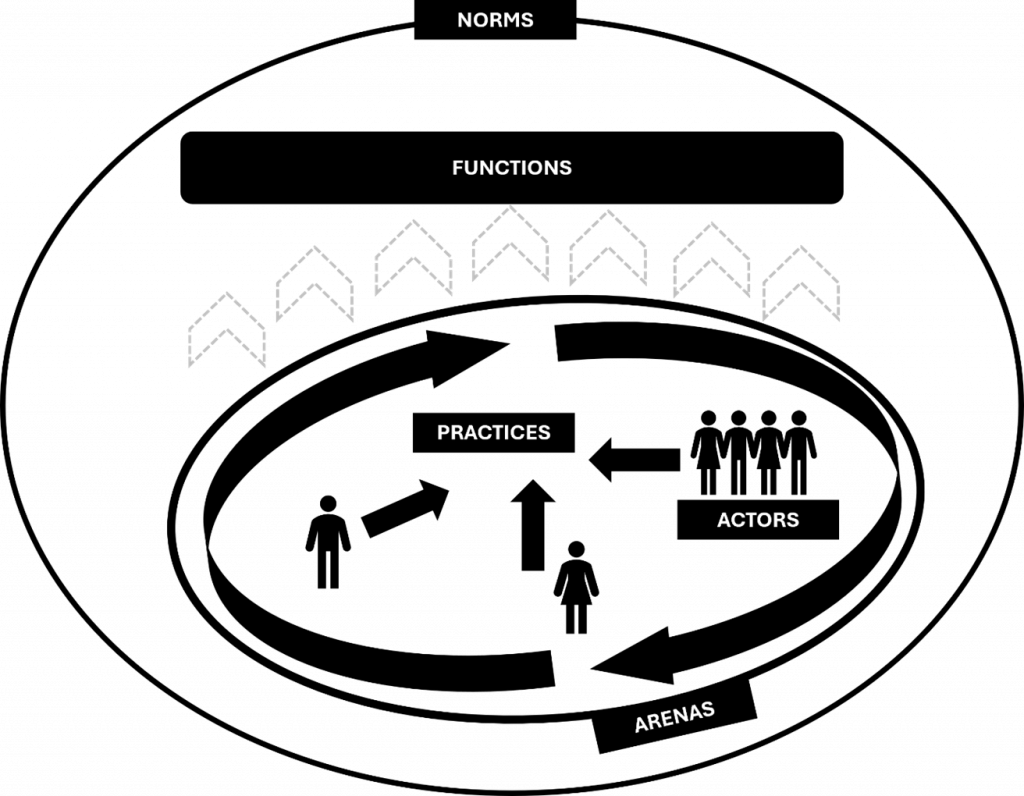
Our objective is to investigate preferences for democratic systems, capturing the complex set of interactions between actors, practices and arenas that characterise real, multi-level European democracies.
Ontological
The nature of a process preference is assumed to be abstracted like an ideological model, reifying normative concepts as if they are real psychological phenomena.
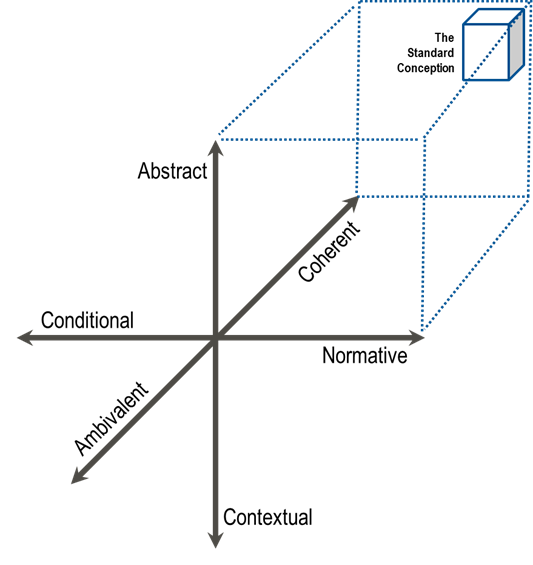
PoPPiE aims to provide a first comprehensive assessment of the extent of contextuality conditionality and coherence in political process preferences by deploying the 3Cs Framework (pictured).

Methodological
Methods for researching process preferences have been determined according to these prior conceptual and ontological commitments, encoding their limits into existing methods and data.
PoPPiE will develop an innovative mixed-methods approach based on two principles: the value of collecting linked quantitative and qualitative data, and the value of including the public in research on democracy.
The new approach will not only strengthen the foundations of the science of process preferences, but ensure its findings are more policy relevant for the project of renewing European democracies.
If you would like to know more about our plans, then you can download a six-page project description.